
Introduction
If you are starting to sell online in 2026, two names will come up in almost every conversation: Amazon and TikTok Shop. Both can build a real business. But they are not two versions of the same thing. They work in opposite ways, they reward different skills, and they punish different mistakes.
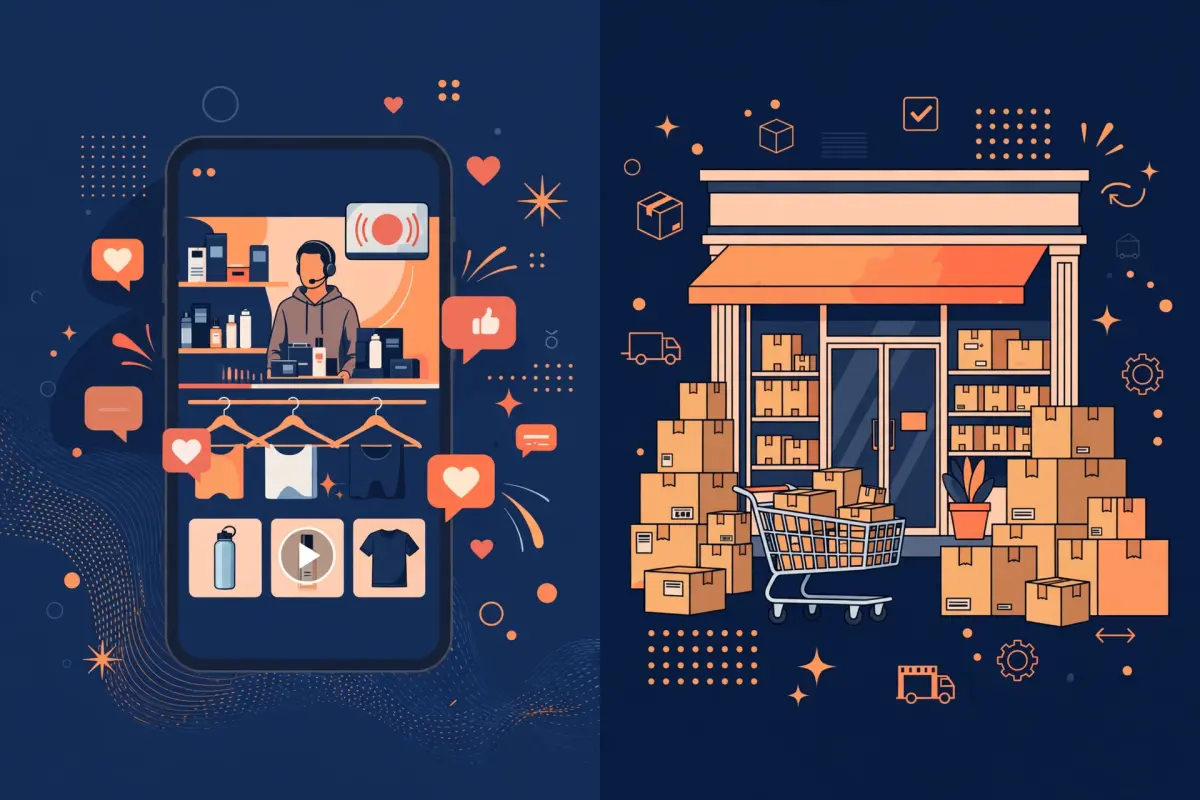
Amazon is a search marketplace. Buyers arrive knowing what they want, type it into the search bar, and compare listings. TikTok Shop is a discovery marketplace. Buyers arrive to watch videos, and they buy things they did not plan to buy five minutes earlier. That single difference shapes everything else: the fees, the skills you need, the speed of sales, and the kind of products that work.
This guide compares the two honestly, side by side, so you can choose the right first marketplace for your products, your budget, and your strengths — instead of copying someone else's choice.
How each marketplace actually works
On Amazon, the buyer does the work. They search, they filter, they read reviews, and they choose. Your job is to be findable and convincing at the exact moment of that search: the right keywords, a clear title, strong images, competitive pricing, and reviews that build trust. Sales are steady and predictable once a listing ranks, but getting it to rank takes time, optimisation, and usually advertising.
On TikTok Shop, the video does the work. A short video demonstrates the product, entertains the viewer, and links directly to the shop. A good video can sell hundreds of units in a day with no search ranking at all. But the traffic is uneven: one video performs, the next ten do not, and yesterday's winning video can stop working without warning. Sales depend on your ability to keep producing content that people actually watch.
Neither model is easier in general. Amazon is harder to start and steadier once running. TikTok Shop is faster to start and harder to keep steady. The right choice depends on which kind of hard you are better at.
Getting started: approval and setup
Setting up on Amazon means creating a Seller Central account, verifying your identity and business details, choosing between the Individual and Professional selling plans, and listing your products with full details — titles, bullets, images, barcodes, and category requirements. The setup is thorough and can feel slow, especially the verification step, which sometimes asks for extra documents. But once it is done, your store is built on a system that has been stable for years.
Setting up on TikTok Shop means creating a Seller Center account, verifying your identity, and linking your products. The setup is generally quicker and more visual, and the platform guides you through connecting your shop to your TikTok account. The trade-off is that TikTok Shop changes its rules, features, and requirements more often than Amazon does, so you need to keep up with announcements in Seller Center.
Both platforms require honest business information and will suspend accounts that provide false details. Use your real name, real address, and real payment details on both. Shortcuts at setup are the most expensive mistakes a new seller can make.
Fees: what each one actually charges
Both marketplaces take a cut of every sale, and both charge in ways that are easy to underestimate. The exact figures vary by product category, by country, and by promotion, and both platforms update their fee schedules from time to time — so always check the current fee schedule in Seller Central or Seller Center before you price a product. What matters here is the shape of the costs.
On Amazon, the main cost is the referral fee — a percentage of the selling price that varies by category. On top of that, there is the monthly subscription if you choose the Professional plan, fulfilment fees if you use FBA, storage fees for inventory sitting in Amazon's warehouses, and advertising costs if you run PPC. A product that looks profitable on paper can lose money once fulfilment and storage are added, so calculate the full cost per unit before you list.
On TikTok Shop, the main cost is the commission on each sale, which also varies by category. There are also payment processing fees, and many sellers spend on creator commissions or affiliate fees to get creators to promote their products, plus the cost of producing videos. TikTok Shop's fulfilment options have their own fees as well, depending on whether you ship yourself or use a fulfilment service.
The honest comparison is this: Amazon's costs are more predictable and easier to calculate in advance, because the fee structure is stable and well documented. TikTok Shop's costs are more variable, because a large share of the spending goes on content and creator promotion, which has no fixed price. Budget for the full picture on either platform, not just the headline commission.
Traffic: how buyers find your products
Amazon traffic is search traffic. Buyers type a product name, and Amazon shows the listings it considers most relevant. Your traffic depends on ranking, and ranking depends on keywords, sales history, reviews, price, and advertising. It is slow to build and hard to lose once you have it. A listing that ranks well can sell steadily for months with little daily effort.
TikTok Shop traffic is content traffic. Buyers find your products inside videos, live streams, and creator posts. Your traffic depends on how watchable your content is, and on whether the platform's recommendation system picks it up. It is fast to build — one video can bring thousands of visitors overnight — and fast to lose, because the feed moves on quickly. A shop that stops posting usually stops selling soon after.
For a new seller, this is the practical difference: Amazon rewards patience and optimisation, TikTok Shop rewards consistency and creativity. If you enjoy making videos and can post several times a week, TikTok Shop plays to your strengths. If you would rather build one excellent listing and improve it over months, Amazon does.
Trust: why buyers hesitate, and where
Buyers trust Amazon because they know the system: clear delivery promises, a familiar returns process, and customer service that handles problems. A new seller on Amazon benefits from that trust from day one, as long as the listing looks professional and the reviews are genuine. The platform's reputation does a large part of the selling for you.
Buyers on TikTok Shop trust the creator more than the platform. They buy because a video convinced them, often from a creator they follow. That means a new seller with good videos can win trust quickly — but it also means trust is fragile. A misleading video, a product that does not match what was shown, or slow shipping can damage your shop's reputation fast, because the same feed that brought buyers in will carry the complaints just as quickly.
Both platforms punish dishonest listings. Exaggerated claims, fake reviews, and misleading photos are policy violations on Amazon and on TikTok Shop, and both will suspend accounts for them. The safest way to build trust anywhere is the same: show the real product, describe it accurately, and ship what you promised.
Fulfilment and day-to-day operations
On Amazon, fulfilment is a solved problem if you use FBA: you send inventory to Amazon, and Amazon picks, packs, ships, and handles most returns. Your daily work becomes listings, advertising, and account health. If you fulfil orders yourself, the work is heavier — packing, shipping, tracking, and handling delivery questions — but you keep more control and more margin per order.
On TikTok Shop, you generally handle fulfilment yourself or through a third-party warehouse, unless you use one of the platform's fulfilment options where available. Orders often arrive in bursts after a video performs, so you need to be ready to pack and ship quickly when a spike hits. Slow shipping after a viral video is one of the fastest ways to collect negative reviews on TikTok Shop, because buyers expect the speed they were promised in the video.
Day to day, Amazon is more routine: check orders, check account health, adjust ads, improve listings. TikTok Shop is more reactive: create content, answer comments, ride the spikes, and keep posting. Choose the rhythm you can actually sustain for months, not the one that sounds exciting for a week.
Returns and customer service
Returns work differently on the two platforms, and new sellers are often surprised by this. On Amazon, returns are handled mostly by Amazon itself when you use FBA, and the process is standardised: buyers return, Amazon grades the item, and your account absorbs the cost according to the rules in Seller Central. It is efficient, but you have little say in individual cases.
On TikTok Shop, returns and disputes are handled through Seller Center, and you are more directly involved in resolving them. Buyers message the shop, and how quickly and fairly you respond affects your shop's standing. Good customer service matters on both platforms, but on TikTok Shop it is more visible, because the same buyers who message you are also the audience for your next video.
Whichever platform you choose, answer buyer messages quickly, solve problems before they become complaints, and treat your return rate as a product signal. A product that keeps coming back is telling you something about the listing or the quality — listen to it.
Which one fits you? A simple decision guide
There is no universal right answer, but most new sellers fall clearly on one side once they are honest about their situation.
**Start with Amazon if:** your product is something people already search for; you have a small catalogue and want steady sales; you are comfortable with spreadsheets, keywords, and slow optimisation; you can afford the setup time and the fulfilment costs; and you want a store that keeps selling with less daily content work.
**Start with TikTok Shop if:** your product is visual, demonstrable, or fun to watch; you are comfortable on camera or can work with creators; you can post content several times a week; you want fast feedback on whether a product sells; and you are happy with uneven sales while you learn what your audience responds to.
**Start with both, in stages, if:** you have the time and the stock to manage two channels. The practical order is usually Amazon first for the stable base, then TikTok Shop for the extra traffic — or TikTok Shop first to test a product quickly, then Amazon once you know it sells. Trying to launch on both at the same time, with no experience on either, usually means doing both badly.
One more factor to weigh honestly: your budget for learning. Amazon's learning cost is mostly time and advertising. TikTok Shop's learning cost is mostly content and creator fees. Both cost real money while you learn. Start with the platform whose learning cost you can afford to pay for three months without sales covering it.
Can you sell on both?
Yes, and many established sellers do. The two platforms reach different buyers in different moods, so the same product can sell steadily on Amazon while spiking on TikTok Shop. The key is to treat them as separate shops, not as one shop copied twice. Listings, prices, photos, and customer messages need to fit each platform's rules and audience. A listing written for Amazon search will look flat on TikTok Shop, and a video that works on TikTok will not help an Amazon listing rank.
If you sell on both, keep your inventory in one system so you never oversell, and keep your pricing consistent enough that buyers do not feel cheated when they find the same product cheaper on the other platform. Multichannel selling is a strength only when the operations behind it are organised.
The bottom line
Amazon and TikTok Shop are not competitors for the same job. Amazon is where buyers go when they know what they want. TikTok Shop is where buyers discover what they did not know they wanted. Your first marketplace should be the one that matches your product, your skills, and the kind of work you will actually do every day. Pick one, learn it properly, and expand only when the first one is running smoothly. If you want help making that choice — or launching properly on either platform — marketplace launch and management is one of EcomPilot's core services, from account setup to listings, content, and daily operations.
FAQ
**Do I need a registered business to sell on TikTok Shop or Amazon?** Both platforms ask for identity and business verification, and the exact requirements depend on your country and seller type. Check the current requirements in Seller Center or Seller Central before you apply, and use your real details.
**Which platform is cheaper for a new seller?** It depends on your product and how you sell. Amazon's costs are more predictable — referral fees, fulfilment, and ads. TikTok Shop's costs vary more, because content and creator promotion are a large part of the spend. Calculate the full cost per unit on each platform before you decide.
**Can I sell the same products on both platforms?** Yes. Many sellers list the same products on both, but the listings, photos, and pricing should be adapted to each platform's rules and audience rather than copied word for word.
**How long does it take to get sales on each platform?** It varies. TikTok Shop can bring sales quickly if a video performs, but the flow is uneven. Amazon usually takes longer to build momentum while a listing gains ranking and reviews, then sells more steadily. Neither platform guarantees fast sales.
**[CTA: Get a Free Store Audit → /get-a-quote]** — or message us on WhatsApp at **+92 345 6209399** and we will help you choose the right first marketplace for your products and budget.